
US Supreme Court Ruling on 2025 Trump Tariffs: How Do The New US Tariffs Affect Books Printed in China?
The US Supreme Court ruled on the 2025 tariffs (IEEPA). Are there new tariffs on books printed in China and do authors qualify for an exemption from the new sweeping global tariffs enacted by President Donald Trump in 2026?
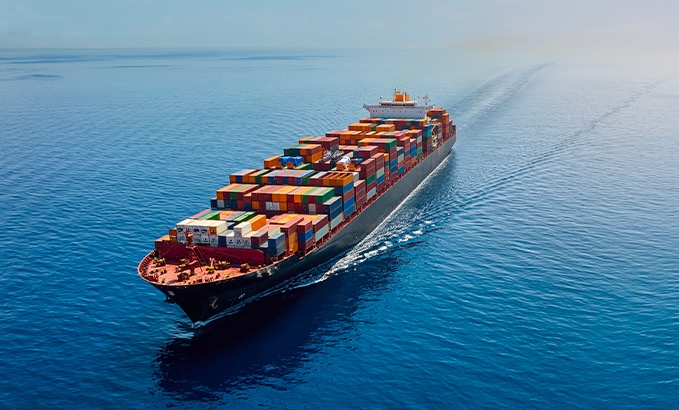
The U.S. Supreme Court recently ruled on the 2025 tariffs imposed by President Trump last year under the International Emergency Economic Powers Act (IEEPA). Soon after that decision, a new temporary 10% (now 15%) import duty was enacted by the Trump administration under Section 122 of the Trade Act of 1974.
Here is the take-away for self-publishing authors and small publishers about tariffs on books:
Most printed books are currently exempt from the new 15% Section 122 tariff because they qualify as “informational materials” under the proclamation.
Most printed books are currently exempt from the new 15% Section 122 tariffs.
If your books are printed in China, standard printed books (excluding journals and notebooks) are not subject to the temporary 15% duty. That said, understanding what changed—and how tariffs work—is still important if you print overseas.
What Changed With the US Supreme Court Ruling and the New Section 122 Tariff?
What did the U.S. Supreme Court rule about the IEEPA tariffs?
The Supreme Court ruled that the President’s use of the International Emergency Economic Powers Act (IEEPA) to impose broad tariffs was unconstitutional. The Court clarified that emergency powers to impose tariffs must stay within the boundaries set by Congress.
IEEPA was originally designed for national emergencies involving foreign threats, not long-term trade restructuring. The ruling effectively shut down the prior global tariff framework that relied on that authority.
What is Section 122 of the Trade Act of 1974?
Section 122 of the Trade Act of 1974 allows the President to impose a temporary import surcharge to address balance-of-payments problems. The law permits a sweeping tariff of up to 15% for up to 150 days.
Unlike Section 301 tariffs or Section 232 tariffs, Section 122 is temporary by design. It is meant to address short-term economic conditions, not serve as a permanent trade policy tool.
What temporary import duty was enacted?
Under Section 122, a 10% ad valorem import duty was announced and changed to 15% the next day. “Ad valorem” means the tariff is calculated as a percentage of the product’s declared value. The likely reason being to normalize the trade deficit of the US compared to other countries.
The 15% tariff takes effect February 24 at 12:01 a.m. Eastern time and applies broadly to imported goods unless specifically excluded in the proclamation. How long will the tariffs last? The maximum allowed timeline is 150 days.
One of those exclusions directly affects books.
Does the New 15% Tariff Apply to Printed Books?
Are books exempt as “informational materials”?
Yes. The proclamation specifically excludes “informational materials (e.g., books)” from the temporary Section 122 import duty.
That means most printed books are not subject to the 15% tariff levied under the current action. For self-publishing authors and creators importing books printed in China, this exemption is critical.
Why does product classification determine whether a tariff applies?
In international trade, each product is assigned a classification under the Harmonized Tariff Schedule (HTS), including books. That classification determines the applicable tariff rate.
If a product qualifies as a printed book under the proper classification, the informational materials exemption applies. Accurate product descriptions and documentation make sure of that treatment. Using an experienced printing company can dramatically reduce the risk of incorrect classifcations.
Are mixed shipments treated differently under tariff rules?
Yes, they can be. If a shipment contains printed books along with other merchandise, each item may be evaluated separately.
Items that do not qualify as informational materials may be subject to the new levies. This is why clarity in shipping documentation matters when importing goods from China or other countries.
How Do the Trump Tariffs Affect Authors Who Have Their Books Printed Overseas?
Does the Section 122 tariff eliminate the cost advantage of books printed in China?
At this time, no. Because printed books remain exempt from the 15% duty, the Section 122 tariff does not change the landed cost of standard book shipments.
Authors who print books in China often do so for cost efficiency at higher quantities, binding quality, and production options. Those factors remain unchanged under the current exemption.
What determines the final landed cost of imported books?
The final landed cost of books printed overseas includes several components:
- Printing costs
- Freight and ocean shipping
- Insurance
- Customs clearance
- Exchange rates
- Any applicable duties or tariffs
Tariffs are only one part of the equation. Under the current Section 122 action, printed books are not subject to the new 15% import duty.
Why does trade policy matter even when books are exempt?
Trade policy can shift quickly. While books are exempt under this temporary tariff, future trade actions could take a different approach.
Understanding how Section 122, Section 301, and other trade laws operate helps authors make informed decisions rather than reacting to headlines.
What Should Self-Publishing Authors Do Moving Forward?
Should authors delay printing because of new tariffs on imports?
In most cases, no. The key is to look at the actual language of the proclamation rather than the buzzword headline summary.
Right now, printed books are explicitly exempt as informational materials under Section 122. Decisions should be based on confirmed details, not speculation.
How can authors protect their margins in uncertain trade environments?
Authors can protect their margins by planning ahead and building reasonable buffers into their pricing. Monitoring trade updates and working with experienced import partners also reduces risk.
Diversifying suppliers or adjusting timelines can provide flexibility if future trade policy changes occur.
What is the likelihood of tariff refunds and de minims being effected?
For now, how or if tariff refunds will occur for past imports from hundreds of thousands of small business importers is currently unknown. There are many logistical barriers to be
De minimis shipments still are not exempt under the new ruling.
What is the bottom line for creators printing books overseas in 2026?
The U.S. Supreme Court struck down the sweeping global tariffs enacted by President Donald Trump under IEEPA. In response, the administration levied a temporary 15% import duty under Section 122 of the Trade Act of 1974.
Printed books and the book trade at large are explicitly exempt as informational materials under the current proclamation (barring a few exceptions). For now, self-publishing authors importing standard printed books are not subject to the new Section 122 tariff.
Trade policy can evolve day to day, but at this moment, books remain protected.